
Our services
Sea freight
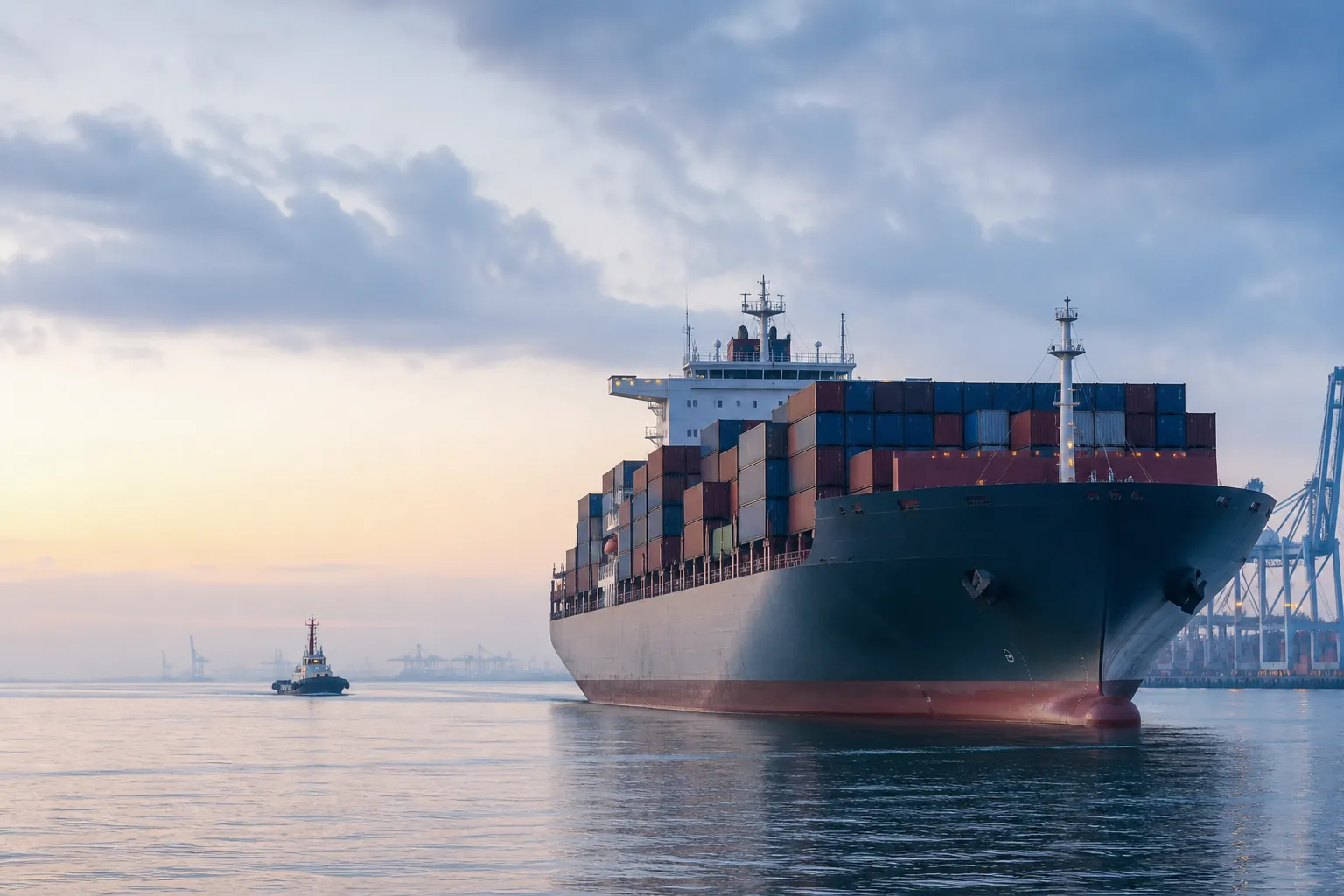
The most economical option for high-volume cargo. We ship in full and shared containers from the world’s main ports, and take on customs and door delivery as well. Export works the same way — out of Baku to any port in the world.
All services
Per cubic metre, sea freight is cheaper than every alternative, which makes it the default choice for furniture, building materials, equipment and seasonal stock. If your volume does not fill a container, we consolidate it at our warehouse in Shanghai or Ningbo with other customers’ cargo and you pay only for the space you take. That is LCL — groupage — and it is how most first shipments from China into Azerbaijan start.
Once the volume reaches roughly 12–15 cubic metres, a full container (FCL) usually works out cheaper per metre and travels alone, so it is not waiting for other cargo to fill the box. We book 20 ft and 40 ft containers from Shanghai, Ningbo and Shenzhen. Ro-Ro is available when the cargo is vehicles rather than boxed goods. The quote names the container type, the freight, the port charges and the clearance in Baku as separate lines, so you can see what you are paying for.
The corridor is built for cargo coming into Azerbaijan, not for a generic east–west product. Loading is at the Chinese ports above; arrival and clearance are in Baku. Between those two points the container moves on the sea schedule, with a transhipment at a transit port when the direct service does not call. That stage is part of the 30–40 day transit we quote and is not an extra invoice.
The working sequence is the same on every shipment. We collect from the supplier, or the supplier delivers to our warehouse. The cargo is counted, checked and photographed. It is loaded, the bill of lading is issued, and you receive a shipment number. From that point you can follow each stage. On arrival in Baku our brokers handle customs clearance; there is no need to hand the cargo to a separate company. Door delivery in the destination city is added when you want it. You can also take the cargo at the port once clearance is done.
The documents are ordinary commercial ones: a commercial invoice, a packing list, and the contract if the customs post asks for it. We review them before the container is loaded, because a mismatch between the invoice and the packing list is the most common reason a box sits. HS classification, duty and VAT are calculated in advance and shown in the quote, so the landed cost is not a surprise two days before the vessel arrives.
Sea is the wrong tool for some cargo. Samples, spare parts and anything that has to be on a production line next week belong on air. High-value electronics in small volume often cost less to fly than to wait. Perishable goods and cargo that cannot take a month in a box should not be booked as FCL or LCL without a conversation first. We say so in the quote rather than taking a booking that will arrive too late.
Insurance is optional, and we recommend it on sea more than on any other mode. A carrier’s liability is capped per kilogram under the sea conventions; that figure is a fraction of the invoice value on furniture, machinery or a container of electronics. All-risks cover is priced at 0.3–0.8% of the cargo value and runs door to door. Reinforced packing and palletising are the other two options that actually change the outcome of a sea voyage; we add them when the cargo is fragile or will be transhipped.
Importers who restock a warehouse, construction firms bringing materials, and furniture and equipment buyers are the usual fit. A first LCL of one cubic metre is accepted; there is no need to wait until you can fill a container. The quote is ready in one working day once we have the packing list, the terms of sale and the delivery address in Azerbaijan. If rail or road would land the same cargo faster for a price that still makes sense, we put that option next to the sea figure so you can choose with both numbers in front of you.
The 30–40 day figure is the whole chain, not the days on the water. Collection and receiving take one to three days. Consolidation at the origin warehouse takes two to five, longer if we are waiting for a second supplier’s cartons. The sea leg is most of the calendar. Clearance in Baku is one to three business days when the file is complete. A box that sits after arrival is usually a document problem, not a berth problem, which is why the papers are checked before the container is loaded.
A usable quote needs a packing list with dimensions and weights, a short description of the goods, the supplier’s city, the delivery city in Azerbaijan, and the terms of sale. Photographs of the packing help when the cargo is fragile or will be transhipped. We do not need a formal tender pack. We do need numbers that match: an invoice that says 12 cubic metres and a packing list that adds up to 18 is the kind of mismatch that stops a box at the terminal.
The mistakes that cost time on this corridor are ordinary. Under-declaring the value to save duty, mixing unrelated HS families on one invoice, booking LCL past the 15 cubic metre mark when FCL is cheaper, and skipping insurance on electronics. We will say so in the quote. Demurrage and detention start if the cargo sits after arrival; pre-cleared documents are how we keep that clock from running. Door delivery is scheduled once the box is released, not guessed at when the vessel is still at sea.
What the service includes
- Collection from the supplier
- Receiving, inspection and consolidation at the warehouse
- Container loading and port formalities
- Sea freight and transhipment at the transit port
- Customs clearance in Baku
- Online tracking by shipment number
Available on request
- All-risks insurance
- Reinforced packing and palletising
- Door delivery in the destination city
At a glance
- Transit time
- 30–40 days
- Minimum volume
- 1 m³ (LCL)
- Loading ports
- Shanghai, Ningbo, Shenzhen
Questions about this service
What is the difference between FCL and LCL?
FCL means a whole container travels with your cargo alone. LCL means your cargo shares a container with other customers’ goods and you pay only for the volume you occupy. From roughly 12–15 m³ upwards, FCL usually works out cheaper.
How is the price calculated?
LCL is priced by the cubic metre, FCL by container type (20 ft or 40 ft). Freight, port charges and customs clearance are all included — each line is shown separately in the quote.
Can I collect the container from the port myself?
Yes. Once clearance is done you can take delivery at the port. Door delivery is a separate service and is added to the quote on request.

Get a quote for this service
Tell us the route, the volume and the type of cargo — we will price it and come back within one business day.