
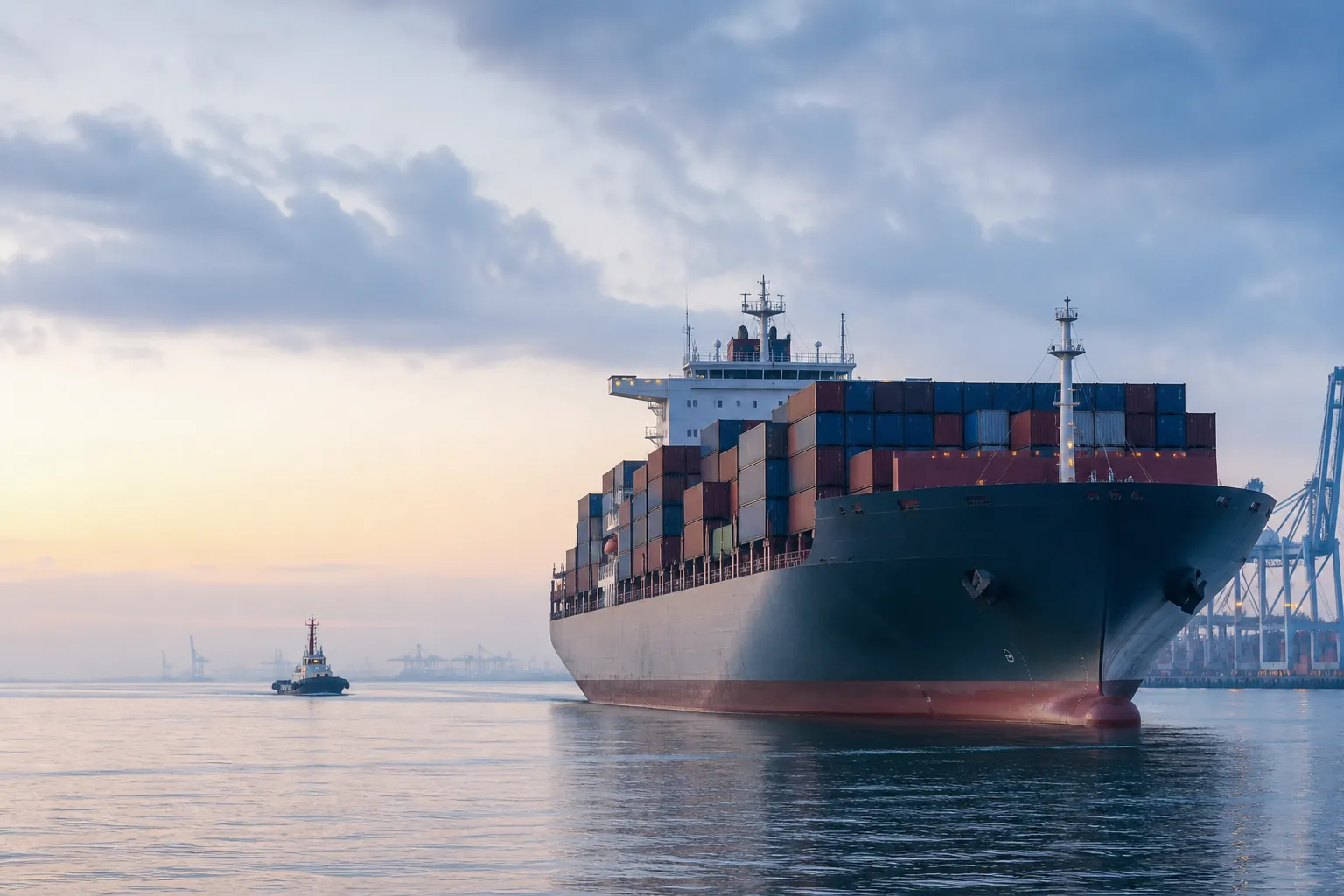
Our services
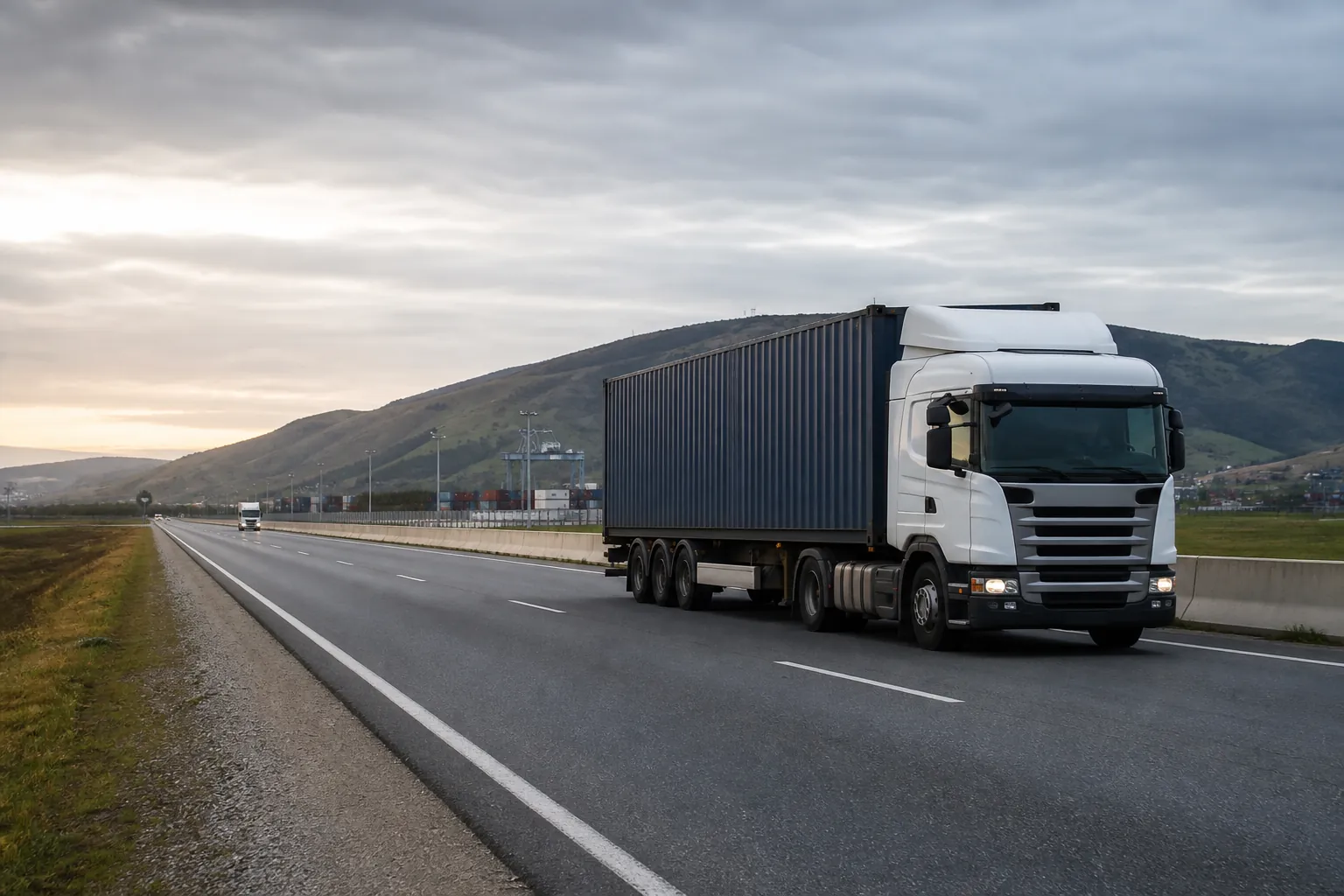
Road freight
The only option that carries cargo from the supplier’s door to the buyer’s door on a single vehicle — with no transhipment in between. Either door can be the far one: a supplier abroad and a buyer in Azerbaijan, or a shipper in Azerbaijan and a buyer abroad.
All services
Road is the most flexible way to build a route: it does not depend on a port or a terminal and works address to address. It is the only option that carries cargo from the supplier’s door to the buyer’s door on a single vehicle, with no transhipment in between. That is the point of the mode on this corridor, and it is why mid-sized consignments and cargo with a firm delivery date usually travel by truck.
With a full load (FTL) the vehicle carries your cargo alone and stops on the way are kept to a minimum. A full truck is about 86 cubic metres or 22 tonnes; from roughly 12 cubic metres upwards FTL is usually cheaper per metre than groupage and faster as well. Groupage (LTL) starts at one cubic metre. It is cheaper when the volume is small, but the vehicle also calls at other addresses, so the calendar is a range rather than a day.
Transit from the main loading countries into Azerbaijan is 18–25 days. Queues at border crossings are outside our control, which is why we never quote a single date. For a critical date we also price air and rail and put the three figures in front of you. CMR is issued for the international leg; customs paperwork is prepared before the truck reaches the Azerbaijani post, not at the booth.
The working sequence is collection, loading and securing, the international run, clearance, and delivery to the consignee’s address. Loading and unloading crews are optional; temperature-controlled trailers are quoted separately when the cargo needs a range, not an ordinary tautliner. We do not put food, pharmaceuticals or other temperature-sensitive goods on a dry truck and hope for the weather.
Documents are the commercial invoice, the packing list, the contract if asked for, and the CMR. We review them before the truck is loaded. A discrepancy between the invoice and the packing list is the usual reason a vehicle sits at a post. Duty and VAT are calculated in advance and shown in the quote, so the landed cost is known before the wheels turn.
Road is the wrong default for a full container of furniture that can wait a month — sea is cheaper. It is the wrong default for a 40 kg spare part that has to be in Baku in a week — air is faster. It is the right default when the cargo is too much for air, too urgent for sea, or needs to travel without being opened and reloaded. Machinery, mixed pallets, shop fit-outs and mid-volume stock replenishment are the usual fit.
Door-to-door means what it says: we collect at the supplier’s address and deliver to yours in Azerbaijan. Everything in between — borders, customs, the CMR — is on us. If you want to collect after clearance, say so in the enquiry; the quote then stops at the customs post rather than at your door.
Insurance is optional. On road it is worth taking when the cargo is high value or fragile, because a carrier’s CMR liability is capped and does not match invoice value. The premium is 0.3–0.8% of the cargo value. The quote is ready in one working day once we have the volume, the weight and both addresses.
The 18–25 day range is loading, the international run, the border posts, clearance and the final delivery. The variable is the queue at the crossing, not the kilometres. We do not pad the range after the truck has left. We also do not promise a Tuesday when the post is running three days behind. For a date that actually matters — a site opening, a shop launch — we price air and rail on the same enquiry so the choice is a number, not a hope.
A usable road quote needs volume, weight, both addresses, and whether the cargo can share a trailer. Dimensions of the largest piece matter: a machine that does not fit a tautliner is a different product. Temperature range, if any, has to be named. Loading hours at the supplier and unloading hours at your site belong in the first message; a truck that arrives at a closed gate is still on the clock.
FTL versus LTL is the decision that changes both price and calendar. Below roughly 12 cubic metres, groupage is usually the cheaper tonne and the slower door. Above that, a dedicated truck often wins on both. We calculate both when the volume sits near the line, rather than selling the product we happen to have a trailer for. If you already have a forklift and a crew, say so — the loading option can come off the quote.
What the service includes
- Collection from the supplier’s address
- Loading and securing
- International haulage and border crossings
- Preparation of transport documents (CMR)
- Delivery to the consignee’s address
Available on request
- Full load (FTL) — a dedicated vehicle
- Temperature-controlled trailer
- Loading and unloading crew
At a glance
- Transit time
- 18–25 days
- Minimum volume
- 1 m³ (LTL)
- Full load capacity
- 86 m³ / 22 tonnes
Questions about this service
What does door-to-door mean?
We collect the cargo from your supplier’s address and deliver it to your address in Azerbaijan. Everything in between — customs, borders, paperwork — is on us.
When is FTL the better value?
From roughly 12 m³ upwards a full load is usually cheaper per cubic metre and faster as well, because there are no extra stops on the way.
Do you guarantee the delivery date?
Queues at border crossings are outside our control, so we quote transit as a range. For critical dates we also price the air and rail options and give them to you for comparison.

Get a quote for this service
Tell us the route, the volume and the type of cargo — we will price it and come back within one business day.